August 31, 2026
HVAC Lead Notification That Gets Calls Made Fast
HVAC lead notification sends every new quote request to your phone in seconds, so your team can call first, book more work, and stop losing jobs daily.
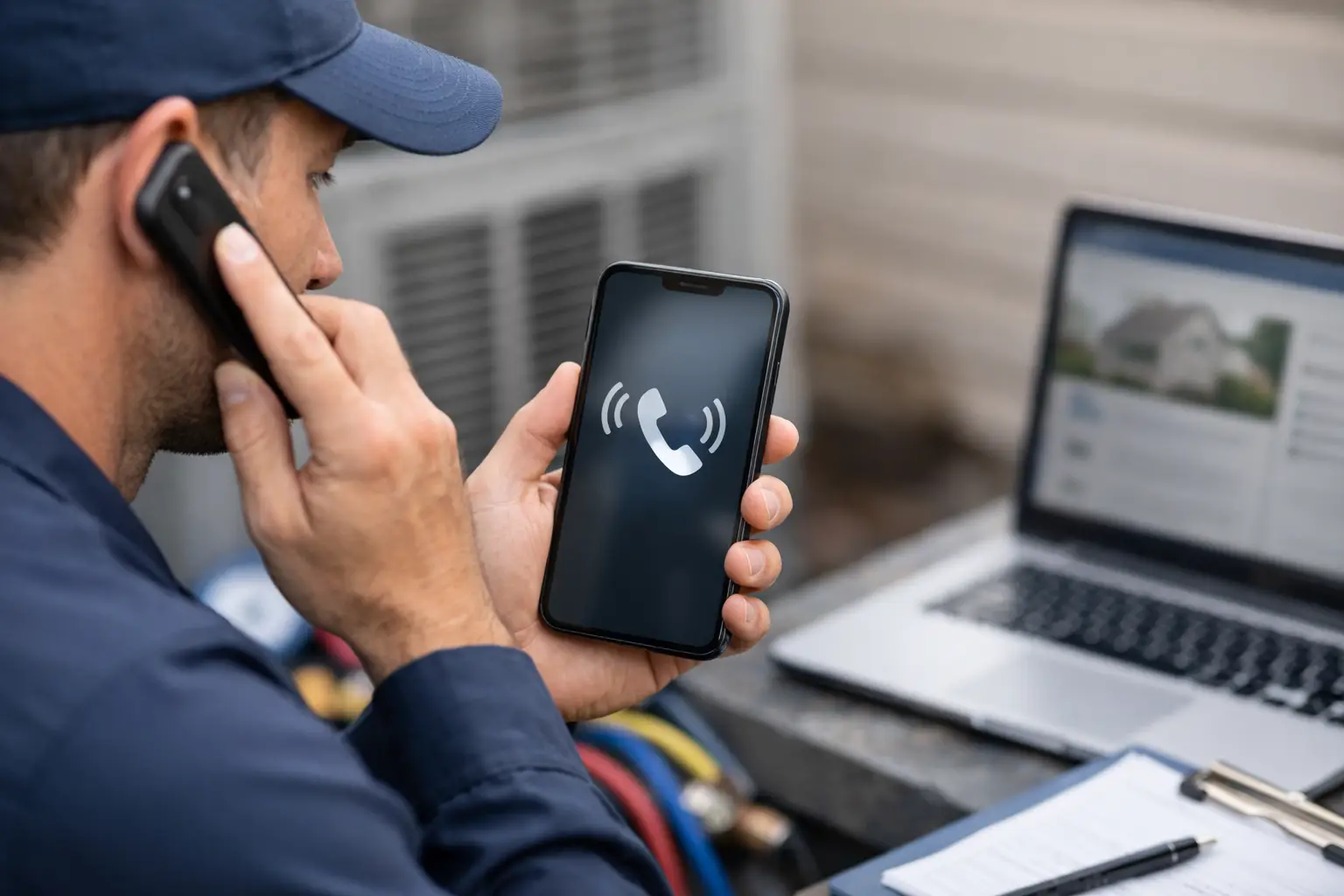
A homeowner’s AC quits at 4:40 p.m. on a July Friday. They fill out forms for three local companies before putting their phone down. If your HVAC lead notification lands in an email inbox nobody checks until tomorrow, the job is already moving to someone else.
That is not a marketing problem. The lead came in. It is not necessarily a pricing problem, either. The homeowner needed help and raised their hand. It is a response problem - and it costs HVAC companies good jobs every week.
For a shop that is running calls, handling dispatch, ordering parts, and managing techs in the field, watching a website inbox is not realistic. Nor should it be. The answer is to get the lead out of the inbox and in front of the person who can act on it right now.
What an HVAC lead notification should do
A useful notification does not simply say, “You have a new lead.” That forces someone to open an app, log into a dashboard, or hunt through an email while a prospect waits.
A useful alert gives your team the information needed to make the call: the customer’s name, phone number, requested service, and the time the form was submitted. It should hit by text and email within seconds, where owners, office staff, and dispatchers already pay attention.
The goal is simple: see the request, tap the number, call the homeowner. No CRM. No dashboard to babysit. No copying details from an inbox into a notepad while the lead goes cold.
Speed matters because most HVAC leads are shopping under pressure. A no-cool call, a furnace that will not start, a refrigerant leak, or a system replacement request is not usually casual research. The prospect may compare reviews and pricing later, but the company that responds first gets the first real conversation. That conversation creates the chance to qualify the job, explain availability, and get on the schedule.
Why email alone loses HVAC jobs
Email has a place in your operation. It is not a reliable emergency bell.
A business owner may be in an attic, driving to a call, talking with a customer, or helping a technician troubleshoot equipment. An office manager may be checking in arrivals, processing invoices, and handling a ringing phone. Even when someone sees an email eventually, “eventually” is a poor response standard for a homeowner who contacted multiple contractors.
The trouble is often hidden. Your website reporting may show form submissions, and your marketing provider may report plenty of leads. But the reporting rarely tells the full story: how long it took to respond, who owned the callback, whether the customer answered, or whether a faster competitor booked the job.
That gap creates false confidence. You can spend money generating demand, see leads in your inbox, and still leave revenue on the table because nobody had a clear, immediate signal to call.
An HVAC lead notification closes that gap. It does not replace your CRM, dispatch software, or estimating process. It handles the moment before all of those systems matter: the first few minutes after a customer asks for help.
Build a response process people can actually follow
The best process is not the most elaborate one. It is the one your team will follow during a packed day.
Start by deciding who receives every website lead. In a small company, that may be the owner and one office person. In a larger operation, it might include the dispatcher, call center, and service manager. Send alerts to more than one person when coverage matters, but make it clear who is expected to call first. Five people seeing a lead with no ownership can still result in zero calls.
Next, set a response target that matches the type of work you sell. For emergency repair requests, aim for minutes, not hours. For replacement estimates, a quick call still matters because the homeowner may be contacting several companies while sitting in a hot house. If you cannot reach them, leave a short voicemail and send a text that identifies your company and offers a callback. Then try again.
Finally, make the first call easy. Your notification should contain the details without requiring an extra step. When the phone rings, the opener can be straightforward: “Hi Jamie, this is Mike with ABC Heating and Air. I just saw your request about the AC not cooling. Are you still looking for service today?”
That is better than waiting until the next morning with, “We received your message.” By then, the customer may have already said yes to another truck.
Keep the handoff simple
Once the prospect answers, your normal workflow takes over. Qualify the issue, confirm the service area, discuss availability, and schedule the call or estimate. Log the outcome in your existing system if that is how your team works.
The notification tool should not force you to rebuild that workflow. For most HVAC businesses, adding another platform with pipelines, tabs, required fields, and new habits creates more friction than value. The job is not to give your staff more software. The job is to make sure they know a ready-to-call customer exists before the competition does.
What to look for in an HVAC lead notification system
Not every alert setup is built for field-service speed. A generic website email notification may be technically functional, but it is weak if it arrives late, lacks the phone number, or goes to one unattended address.
Look for immediate delivery by text as well as email. Text is harder to miss when someone is away from a desk. Make sure multiple team members can receive alerts without extra per-user costs, especially if your coverage rotates between the owner, office, and on-call staff.
The alert should work with the website form you already use. Rebuilding forms, changing your site, or replacing your CRM just to receive faster notifications is unnecessary overhead. You want the lead details to move from the form to your phone quickly and reliably.
Also consider the difference between an alert and an automated reply. An instant confirmation to the homeowner can be helpful, but it is not a substitute for a real call. Automation can tell them their request was received. Your team still needs to make contact, answer questions, and earn the booking.
Reliability matters more than flashy features. If a notification fails during a heat wave, the fancy reporting screen does not help. Test your setup by submitting your own form. Check how fast alerts arrive, what information appears, and whether the right people receive them after hours.
Measure the money hiding in response time
You do not need a complicated attribution model to see whether faster lead response is paying off. Start with a few numbers: website leads per month, the percentage you reach, your booking rate, and the average value of a booked job.
Say your website produces 40 leads a month. If delayed follow-up means you connect with only half of them, that is 20 real conversations. Improve coverage and response speed enough to reach five more prospects, and even a modest conversion rate can produce an extra repair call, maintenance agreement, or replacement estimate. One booked install can pay for a simple notification tool many times over.
There are trade-offs. A lead at 10 p.m. may not deserve an immediate live call if your company does not offer after-hours service. But it still deserves a defined next step, such as an alert to the on-call person or a first-thing-in-the-morning callback. The right standard depends on your service hours, staffing, and the promises you make on your website.
What should not depend on luck is whether anyone notices the lead.
DibsText is built for this exact operational gap: website form submission in, lead details sent by text and email within seconds, with no new dashboard for your team to monitor. It can sit alongside the systems you already use while helping the right person call when intent is highest.
Your next website lead is not asking for a better software stack. They are asking for help. Make sure the person who can give it gets the message before another HVAC company gets the job.
Stop losing leads to slow response times.
DibsText texts you the second a lead comes in. Free 14-day trial, no credit card.
Start Free Trial